
When you first pick up that elegant wine decanter, you might think it’s just a decoration—or an accessory only needed for red wine. But in reality, a decanter is more than just a beautiful table setting; it plays an essential role in the wine-tasting experience.
Today, let’s talk about the top ten functions of a wine decanter so that the next time you open a bottle, you can more confidently say, “I know why it exists.”
Function 1: Oxidation/Aeration
This is the most basic function of a wine decanter, and the one most people think of—allowing the wine to “breathe.”
Pour the wine from the bottle into the decanter, and the air will come into contact with the wine, quickly releasing its aroma and softening its astringency. This is especially true for young red wines, as it allows them to reveal their hidden depths.
Many wine lovers describe this change as “awakening the wine.”
However, it’s important to note that oxidation is an art form—if the timing and method are wrong, the aroma of the wine will dissipate. Just like cooking, if the heat is too high, the aroma will disappear.
Function 2: Sediment Separation
This is what wine lovers value most: many aged wines have sediment at the bottom of the bottle. If you are not careful when pouring the wine, particles and impurities will enter the glass and affect the taste.
A decanter can help you easily solve this problem: slowly pour the wine into the decanter, leaving the sediment in the bottle, ensuring that every sip of wine is clean and smooth.
For those who like to savor the wine delicately, this is almost the primary reason to choose a decanter.
Function 3: Tannin Softening & Structure Adjustment
Some young red wines have strong tannins and may seem “tight” or “astringent” when opened. The oxidation effect of the decanter will gradually soften these tannin molecules, making the wine more rounded and smooth.
You will find that the moment the wine is poured out of the decanter, the taste and aroma are more layered—a bit like it has been “pre-matured.”
This does not make the wine completely old but allows it to more easily show its potential in a short period of time.
Function 4: Release complex aroma
Some of the aroma of wine in the bottle is actually “locked” all the time. A decanter acts as an aroma accelerator, releasing these delicate layers.
For example, the aroma of oak barrel aging, earthy flavor, and roasted fruit aroma will become more obvious after pouring into the decanter.
This subtle change will make you feel that the wine and the air are in “dialogue,” more like a warm experience than simply drinking.
Function 5: Mouthfeel / Balance
A decanter not only allows the aroma to be released but also subtly improves the balance of the wine. The acidity, tannins, fruitiness, and alcohol will be more harmonious, and the taste will be softer.
Many people describe this experience as “The wine tastes smoother, as if it has been smoothed out.”
But remember, this is not an instant miracle but a subtle adjustment that takes time to experience.
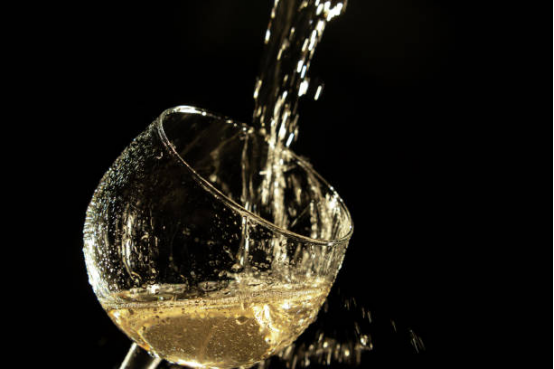
Function 6: Off-Odor Reduction
It’s not uncommon for a newly opened bottle of wine to have slightly unpleasant aromas, such as sulfide or lamp oil.
These tend to fade or disappear by pouring the wine into a decanter and giving it some air exposure.
Of course, this isn’t a panacea, and not all problems can be solved by decanting. But in most cases, a decanter can make the wine “cleaner.”
Function 7: Aesthetic/Presentation
A decanter is not only a functional tool but also an essential part of the wine-tasting ritual. The transparent glass, elegant curves, and the wine flowing slowly through it are a visual experience in themselves.
In high-end restaurants and cocktail parties, a decanter can instantly elevate the style of the entire scene. Even at a family gathering, it can make the wine table more ceremonial.
Function 8: Pouring Aid / Flow Control
A good decanter is not only about the quality of the wine but also about the pouring experience. A well-designed pouring spout and neck shape can ensure a smooth flow of wine without splashing or disturbing the sediment.
Some high-end decanters even come with a strainer or stopper to further enhance the delicacy of pouring wine. This is not only a detail of wine tasting but also a respect for wine.
Function 9: Acceleration of Maturation
A decanter can’t truly replace time, but it can help wine mature in a short period of time.
The oxygen released accelerates the release of aromas, giving the wine a deeper, more complex appearance.
This is one reason many wine tasters use a decanter to assess a wine’s potential.
However, the “acceleration effect” of a decanter is limited and cannot instantly turn a young wine into an aged fine wine. It simply makes the wine unfold faster, rather than changing its essence.
Feature 10: Cork Fragments/Opening Defect Mitigation
Sometimes the cork breaks when you open a bottle and falls into the wine. A decanter can also help in this situation: use a strainer to filter out the residue as you pour the wine, preventing the debris from entering the glass.
Although this function may not be used every time, the decanter can be very useful when you encounter a bottle-opening defect.
Summary and usage suggestions
In fact, the functions of a decanter are not isolated but intertwined with each other: aroma release, structure adjustment, and sediment separation are the core; aesthetics, pouring experience, and debris filtering are additional bonus points.
Here are some practical suggestions for you:
- Use according to the wine:Young red wine and structured wine are more suitable for decanting; be cautious with delicate fruity wine.
- Moderate oxidation: Do not let the wine decant for too long to avoid disrupting the balance.
- Gentle pour: Pour slowly along the inner wall to reduce disturbance.
- Clean in time: residue will affect the next fragrance release.
- Experience first: A decanter is a tool to enhance the experience, not a necessity.
Next time you open a bottle, give it some time and ritual. Let the wine breathe and see how it develops.
Cheers.