
The world of wine is full of surprises and enchantment. Have you ever wondered why different wine bottles look so different? From the petite “Piccolo” to the breathtaking “Nebuchadnezzar,” each bottle has its own unique story and purpose. More than just a container for wine, they carry history, culture, and taste. Today, let’s uncover the secrets of these large wine bottles, learning about their sizes, shapes, and the little-known details behind them. By the way, if you’re passionate about enjoying wine, pairing it with a quality wine decanter will help maximize the aromas and flavors.
1. Size and Capacity of Wine Bottles
Wine bottles aren’t just sized for capacity. From miniature to giant, they cater to nearly every drinking occasion. Imagine a Magnum filling a casual gathering with friends, or a Nebuchadnezzar instantly becoming the center of attention at a grand celebration. Below is a table comparing the capacities of common large wine bottles (for your reference when collecting or selecting bottles):
| Capacity (ml) | Capacity (liters) | name | Equivalent to the quantity of a standard bottle (750ml) |
| 187.5 ml | 0.1875 | Piccolo / Split | 1/4 |
| 375 ml | 0.375 | Demi / Half | 1/2 |
| 750 ml | 0.75 | Standard | 1 |
| 1.5 L | 1.5 | Magnum | 2 |
| 3.0 L | 3.0 | Double Magnum | 4 |
| 4.5 L | 4.5 | Jeroboam | 6 |
| 6.0 L | 6.0 | Methuselah / Imperial | 8 |
| 9.0 L | 9.0 | Salmanazar | 12 |
| 12.0 L | 12.0 | Balthazar | 16 |
| 15.0 L | 15.0 | Nebuchadnezzar | 20 |
| 18.0 L | 18.0 | Solomon / Melchior | twenty four |
These dimensions aren’t just a reflection of capacity; they also carry a rich tapestry of culture and history. As you slowly pour a glass of wine and gently swirl it in the wine decanter, the aroma released transports you to the celebrations of that era.
2. The origin of the naming of wine bottle sizes
ritual butMany large wine bottles are named after biblical figures, a naming tradition that continues to this day. Each name not only brings a sense of ritual, but also adds mystery and anticipation to the moment of opening the bottle:
- “large,”Magnum (1.5 L): Latin for “large”, most commonly used for champagne and red wine, and a common choice for gatherings with friends.
- Jeroboam (3.0 L): Name of King Jeroboam of Israel, commonly used in champagne.
- Methuselah (6.0 L): The name of Methuselah, the longest-lived man in the Bible. Usually contains sparkling wine.
- Nebuchadnezzar (15.0 L): Named after King Nebuchadnezzar of Babylon, this bottle is equivalent to 20 standard bottles of wine, and the opening is unforgettable.
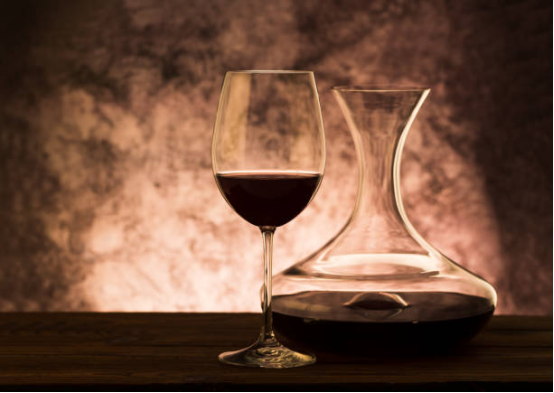
When used with a wine decanter, especially with these large bottles, the aroma is quickly released, making the moment of opening the bottle more than just pouring the wine but also a dual enjoyment of sight and smell.
3. Common wine bottle shapes and uses
Different wines require different bottle shapes. The shape of the bottle not only affects storage but also affects the development of flavor. Here are some common shapes and their characteristics:
1. Bordeaux Bottle
- Features: upright bottle, broad shoulders.
- Application: First choice for red wines such as Cabernet Sauvignon and Merlot.
- Advantages: Easy to store and stack for a long time. When paired with a wine decanter, the bubbles and aroma are released more evenly when pouring.
2. Burgundy Bottle
- Features: rounded bottle body and narrow shoulders.
- Application: Pinot Noir, Chardonnay.
- Advantages: It helps the wine oxidize, allowing the aroma and flavor to gradually unfold. Adding a wine decanter can add a richer, more complex flavor.
3. Alsace Bottle
- Characteristics: Tall and slender, with slightly sloping shoulders.
- Uses: Riesling and other white wines.
- Advantages: Maintains a fresh taste, while the elegance of the bottle makes the pouring process more ceremonial.
4. Champagne Bottle
- Features: Thick bottle wall and concave bottom.
- Uses: Champagne and other sparkling wines.
- Advantages: Withstands bottle pressure, keeping bubbles vibrant. Decanting champagne with a wine decanter creates a more visually and palate-enhancing experience.
Behind each bottle design lies the result of a combination of historical evolution and practicality. Every time you open a bottle and pour a bottle, it’s like experiencing a taste of history.
4. The social and collection value of large bottles
Large wine bottles are often used in grand celebrations and social occasions, symbolizing luxury and nobility. Their advantages are not only reflected in their capacity:
- Storage advantages: large capacity, small contact area between wine and air, more conducive to aging.
- Visual impact: Salmanazar and Nebuchadnezzar instantly become the focus of the party.
- Collection Value: Limited production, with great potential for appreciation over time.
However, large bottles also have challenges:
- Storage space: A large enough wine cabinet or display area is required.
- Temperature control requirements: Sensitive to temperature fluctuations and requires a constant temperature environment.
- Difficulty of handling: Due to its heavy weight, opening the bottle and pouring the wine may require the use of a wine decanter and specialized tools.
5. How to choose the right wine bottle size
Choosing a wine bottle is a science and a strategy:
- Occasion: A small family gathering or a large banquet? The bottle shape directly affects the experience.
- Type of wine: red wine, white wine, or sparkling wine, each suitable for different bottle types.
- Storage conditions: whether there is sufficient space and temperature control in the wine cabinet.
- Budget considerations: Large bottles of wine are expensive, so choose rationally based on your budget.
It is worth noting that with a high-quality wine decanter, even a bottle of ordinary capacity can fully release the aroma of the wine, making every sip worth savoring.
VI. Conclusion
The size and shape of wine bottles mean much more than just holding wine. They carry history and culture and are symbols of taste and sociability. Understanding this knowledge will not only empower you with greater confidence when purchasing and collecting but also make every bottle opening a moment of ritual.
Whether for everyday drinking or a grand occasion, pairing a large bottle with a wine decanter can add a unique charm to your wine experience. The next time you’re faced with one of these captivating giant bottles, remember to take your time, smell the aroma carefully, and let history and taste blend seamlessly in this moment.