What are tannins in wine? Understanding this makes wine tasting easier.

Table of Contents
I. What is tannin? Why does a wine decanter make it more interesting?
When you pick up the wine decanter to pour wine, your taste buds are about to encounter an “invisible protagonist”—tannins.
Tannins are a class of natural polyphenols, mainly derived from the skins, seeds, and stems of grapes, as well as components released during aging in oak barrels. They are not readily apparent in wine, but they directly determine the wine’s structure and flavor.
In short: tannins give wine “bone,” create a slightly dry sensation in the mouth, and are also an important factor in determining its aging potential.
Simply put, the acidity, fruitiness, and sweetness of wine are balanced by the presence of tannins. Using a wine decanter is like giving the wine a “gymnastics” treatment, allowing the tannins to release their smoothness, making it more rounded and pleasant to drink.
II. The Source of Tannins: Why are Some Wines Particularly “Astringent”?
1. Grape skins, seeds, and stems
During the red wine making process, the wine comes into contact with the skins, seeds, and stems, and the tannins gradually dissolve into the wine.
Cabernet Sauvignon and Nebbiolo are typical varieties with high tannin content.
The longer the soaking time and the greater the pressure, the more tannins are released.
2. Aged in oak barrels
Many red wines mature in oak barrels, where the tannins from the oak integrate with the wine, increasing its complexity.
This is why wines from the same grape variety can taste very different from those from different wineries—the tannins from the oak barrels are a hidden variable.
3. Brewing techniques
The maceration temperature, pressing method, and fermentation time all affect the strength of tannins.
Some young red wines have strong tannins and a pronounced astringency; older wines have smoother tannins and a silkier taste.
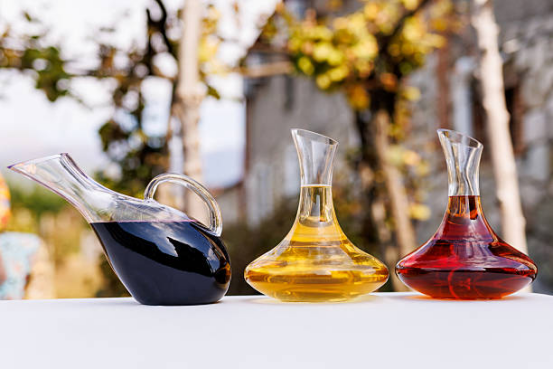
III. How does a wine decanter interact with tannins?
using a wine decanter is not to “eliminate tannins,” but to make them smoother and easier to drink.
1. Awakening with Aroma
After being poured into a decanter, the wine comes into contact with the air, gradually releasing its closed aromas.
You’ll find that the originally slightly astringent tannins soften, and the fruit, caramel, and even leather aromas become more pronounced.
2. Texture Adjustment
While the tannins won’t decrease, they will feel rounder.
This is especially true for young Cabernet and Syrah wines; letting them decant for 30-60 minutes significantly reduces astringency and creates a more harmonious structure.
3. The combination of time and decanter
- Young, tannic wines: 30-60 minutes
- Medium-bodied: 15-30 minutes
- Aged wines: 10-20 minutes or just for separating sediment.
A decanter is not just a “pretty wine tool,” but more like a tuner for your taste buds, allowing the tannins to achieve the best harmony with the wine.
IV. The Importance of Tannins: More Than Just Astringency
1. Constructing the wine’s body structure
Tannins give wine its “structure,” allowing it to unfold in layers in the mouth rather than simply gliding over.
You can feel that subtle tightening on your tongue, gums, and lips—a sensation that is one of the souls of red wine.
2. Determines aging potential
The key to a wine’s long-term aging potential lies in its tannins.
Over time, tannins coalesce and soften, resulting in a more complex and richer aroma.
3. Food pairing tips
Wines with strong tannins pair best with high-protein, high-fat foods, such as red meat and cheese.
These can neutralize the dryness and make the tannins appear more rounded.
When using a wine decanter, if paired with the right dishes, the flavor of the tannins will be “harmonized,” resulting in a more comfortable overall experience.
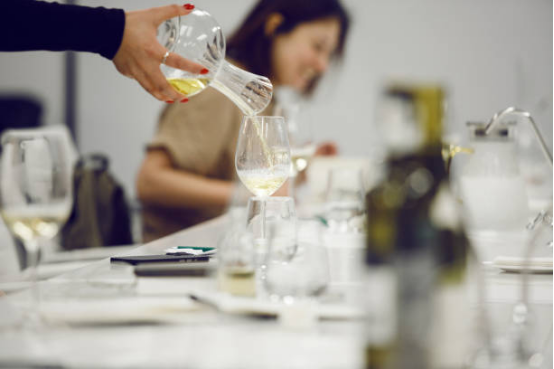
V. Practical Guide: Mastering Tannins at Home with a Wine Decanter
Understanding wines
- Young wines with high tannins: Cabernet, Nebbiolo
- Medium-tannin wines: Merlot, Malbec
- Mature wines: Aged Pinot Noir, Old-fashioned Syrah
pouring wine into a decanter,
allow the wine to come into full contact with air to “preheat” the tannins.
resting time
- Young wine, 30-60 minutes
- Medium wine, 15-30 minutes
- Aged wine 10-20 minutes
Taste the rhythm
- Take a sip of the wine first, and feel the astringency.
- When paired with suitable food or left to sit for a while, the tannins become smoother.
- Pay attention to the “tightening sensation” in your mouth to decide whether to continue decanting.
Food pairing suggestions
- High-protein and high-fat foods can neutralize tannins.
- Young wine with red meat, aged wine with soft cheese
VI. Clarification of Common Misconceptions
- Does tannin equal bitterness?
Actually, it’s a “soreness,” not direct bitterness. - Can a decanter eliminate tannins?
Incorrect. A decanter only improves the experience; it does not reduce tannin content. - Does baijiu (Chinese white liquor) contain no tannins?
A small amount is present, especially in cases of leather contact or aging in oak barrels.
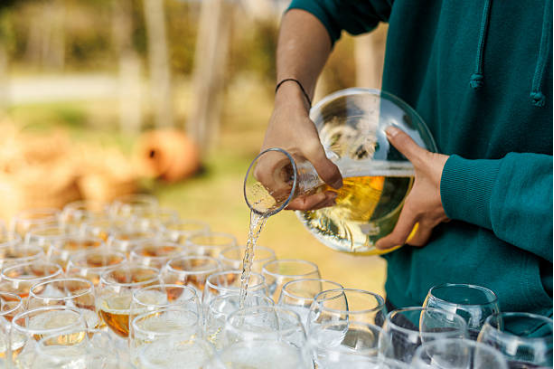
VII. Tips: Enhancing the Tannin Performance of Wine Decanter
- To reduce the irritation, choose to pair with cheese, bacon, and creamy pasta, and extend the decanting time appropriately.
- To experience the “power” of tannins, shorten the decanting time and enjoy it directly with red meat.
- For older wines: Decant for a short time to avoid losing aroma.
VIII. Conclusion: Mastering Tannins and Enhancing the Wine Tasting Experience with a Wine Decanter
Tannins are the backbone of wine, a testament to its age.
A wine decanter is the tool to awaken and harness them, releasing their aromas and smoothing their texture.
Every time you pour wine, every time you taste it, you’re learning about its structure and rhythm.
The next time you pour wine with a wine decanter, don’t forget to observe and savor the tannins—
you’ll discover that endless possibilities lie hidden behind the dryness.