Terroir Wines and Wine Decanters: Understanding Terroir and Unleashing its Flavors

In the world of wine, the term “terroir” is frequently mentioned, yet often misunderstood. It is not merely a synonym for land or climate, but rather the embodiment of the soul of wine. And when we talk about how to truly experience the charm of terroir, an indispensable tool—the wine decanter—comes to the forefront.
This article will take you deeper into understanding “what is terroir,” how terroir influences wine, and why a good wine decanter can help you better understand the expression of terroir.
I. What is “Terroir”? The Secret Code to a Wine’s Unique Character
The term “terroir” originates from the French word “terre,” meaning land, but it is far more complex than simply “soil.” Terroir encompasses climate, topography, soil, sunshine, rainfall, and even winemaking culture and human traditions. These five elements collectively shape the character of the grapes and determine the unique character of each bottle of wine.
Imagine the same grape variety—such as Pinot Noir—grown in Burgundy, France, and Central Otago, New Zealand, producing completely different flavors. The former is elegant and delicate, with aromas of earth and red cherry; the latter is fruity and exuberant, with a touch of wildness. This is the power of terroir.
II. How does terroir affect the flavor of wine?
Terroir is more than just a “label of origin”; it determines the “personality profile” of a wine.
Here are three main dimensions of terroir’s influence:
1. Climate: Determines the balance of sweetness and acidity in grapes.
- Wines produced in cool climates (such as the Moselle region of Germany) have high acidity and fresh fruit flavors;
- Wines from warm climates (such as Barossa, Australia) tend to be full-bodied and have a strong alcohol content.
2. Soil type: imparts a sense of minerality and structure.
- The limestone soil gives the wine a more “bony” texture.
- aroma.The volcanic rock imparts a smoky and mineral aroma;
- Sandy soil makes the wine smoother.
3. Topography and Culture: The Character and Stories That Give Wine its Flavor
Hillside vineyards benefit from good drainage and large temperature differences between day and night, resulting in more uniform grape ripening;
while human factors—such as hand-harvesting and oak barrel aging—imbue the wines with a local character.
III. The role of wine decanter in terroir wines
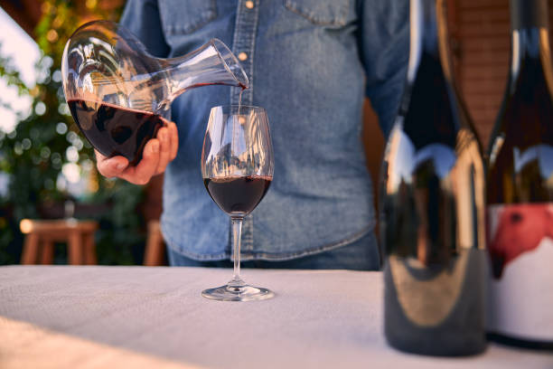
When it comes to appreciating terroir wines, a wine decanter is indispensable. Decanting is not only about “letting the wine breathe,” but also about helping the wine release the layers of its terroir.
1. Awaken hidden fragrances
Terroir wines often possess complex and subtle aromas. Using a wine decanter accelerates oxidation, allowing the wine to come into contact with air and release subtle differences in earthy, herbaceous, limestone, or fruity aromas. These aromas are the language of terroir.
2. Soften tannins for a more balanced taste.
Especially for red wines from cooler regions with stronger tannins, a 30-minute wine decanter treatment will make them appear rounder and smoother. You can more clearly feel the structure imparted by the terroir, rather than having it masked by astringency.
3. Enhance the tasting experience
A well-designed wine decanter (such as a wide-bottomed or rotating-bottomed design) increases the surface area for air contact, allowing the wine to aerate more quickly. Compared to drinking directly from the bottle, decanted terroir wines have a more complex aroma and layered flavors, better reflecting the uniqueness of the region.
IV. Choosing the right wine decanter: Considerations for shape and material
When choosing a wine decanter, you should select one based on the type of wine and the characteristics of the terroir.
1. Slender neck and long body (decanter)
Suitable for aged white wines or light terroir reds, such as those from Burgundy or the Rhône Valley. It gently awakens the body of the wine without causing excessive oxidation.
2. Wide-bottomed decanter
Suitable for terroir wines with full tannins and a strong structure, such as Bordeaux Cabernet Sauvignon or Spanish Rioja. The wide bottom design allows the wine to breathe fully, revealing the deep minerality of the terroir.
3. High-transparency glass or crystal material
The transparent material allows one to observe the changes in the wine’s color, which is also part of appreciating the terroir. A good wine decanter should combine functionality and aesthetics, becoming a work of art on the wine table.
V. How to better understand terroir through a wine decanter
Using a wine decanter is not just about “decanting” wine; it’s more like an exploration—listening to the stories of each land.
- Observe the changes in wine color: Light-colored wines often come from cooler regions, while dark-colored wines are mostly from sunny terroirs.
- Smell the aroma layers: If you smell damp stones or earth, it may mean limestone or volcanic soil;
- Experience the texture and structure: a firm acidity or a heavy tannin are both manifestations of terroir.
With the help of a wine decanter, these details become easier to notice. Every pour, every swirl, is a process of dialogue with the terroir.
VI. Conclusion: Using wine decanter to unlock the soul of the land
Terroir is the root of wine, and a wine decanter is the key to understanding this land.
Next time you taste wine, slow down—pour it into a decanter, let time and air participate, and experience the essence of the land, the sunshine, and the people.
Whether it’s a collector’s item of terroir wine or a niche region’s wine for everyday enjoyment, a wine decanter is the secret weapon for bringing out the layers of flavor. The moment the wine swirls in the glass, the soul of its terroir is awakened.