At what temperature should wine be stored? — A delicate balance between temperature and time

You may have heard the classic saying: “Temperature is wine’s biggest enemy.” This sentence sounds a bit exaggerated, but those who really understand wine know that it is actually not false at all.
Wine isn’t a static liquid; it’s a living, organic system. It contains a variety of active components, including alcohol, organic acids, tannins, phenols, and aromatic esters. Temperature fluctuations are like conducting a chemical orchestra: a slight increase speeds up reactions; a slight decrease brings everything to a near standstill.
- When the environment is too hot, the wine will “age” prematurely—the aroma becomes dull and the fruit flavor is unbalanced.
- If it is too cold, some wines will freeze and expand, and the cork may be pushed up or even broken.
The worst part is the frequent temperature swings. Warm days and cool nights cause the air pressure inside and outside the bottle to fluctuate repeatedly, sucking air into the bottle bit by bit and accelerating oxidation.
Therefore, a good wine storage environment is not the coldest but the most stable.
- The WSET’s advice is clear: ideally, a wine cellar temperature should be maintained between 10 and 15°C (50–59°F), with extreme temperature fluctuations avoided as much as possible.
- To sum it up in one sentence: If you want wine to age gracefully, give it a stable and quiet “home.”
Ideal storage temperature: that mysterious “sweet spot”
Different wines have different suitable storage temperatures. The following are reference ranges given by authoritative organizations and wine merchants:
| Alcohol/Situation | Recommended storage temperature | illustrate |
| Long-term wine storage | 12–14 °C (≈54–57 °F) | Known as the “sweet spot,” it achieves an ideal balance between aging speed and aroma retention. |
| All types (general) | 7–18 °C (≈45–65 °F) | Coravin recommends a general range, with an ideal point at 13°C. |
| red wine | 13–18 °C | Ideal range for maintaining soft tannins and stable structure. |
| White wine/Rosé/Champagne | 7–13 °C | A slightly lower temperature can preserve the refreshing fruity aroma and acidity. |
For example:
- A bottle of Cabernet Sauvignon best displays its balance at 15–16 °C;
- For a refreshing Chardonnay or Sauvignon Blanc, around 10°C is ideal;
- Champagne, sparkling wine, or sweet white wine should be served even cooler, 7–9°C, to best preserve the bubbles.
Many wine cabinets and wine decanter brands default to 13°C (55°F). This is no coincidence—it’s the golden mean for nearly all types of wine.
More than just temperature: stability, humidity, vibration and light
In the world of wine storage, temperature is certainly the “protagonist,” but there are several equally important “supporting roles.”
1. Constancy is more important than temperature itself
Rather than obsessing over whether to keep the temperature at 12°C or 14°C, consistency is key.
Frequent temperature fluctuations cause the wine to expand and contract, loosening the cork and allowing air to enter. The WSET also clearly states that temperature fluctuations are one of the main causes of wine deterioration.
2. The humidity should be just right
If the humidity is too low, the corks will dry out and crack, allowing air to enter. If it’s too high, mold may grow. The ideal humidity is between 60% and 75%. This range keeps the corks moist but prevents mold from forming.
3. Avoid vibration and bumps
Wine appreciates a quiet life. Constant vibration disrupts sediment and throws the wine’s chemical reactions off balance. Every wine lover agrees that keeping wine away from vibration sources like motors, speakers, and refrigerators is essential.
4. Avoid light and odor
Sunlight and ultraviolet rays are invisible killers of wine, which will break down the aroma molecules; at the same time, the wine bottle is sealed but not completely isolated—if you put it in the kitchen, paint room, or next to the perfume cabinet, the smell may be “absorbed” into it.
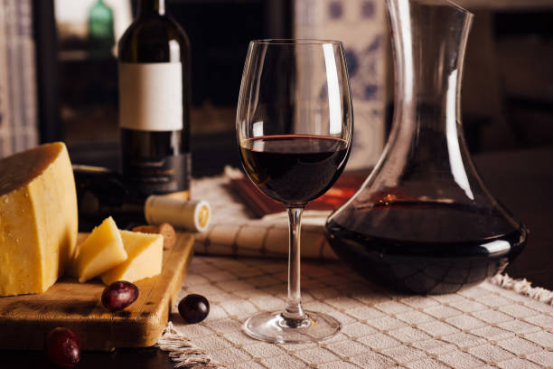
How to create an ideal storage environment for wine
If you don’t have a natural wine cellar at home, don’t worry. The following practical tips can help you easily create a “stable space”:
- Choose a suitable space: Basements, closed storage rooms, and cool corners are all good options. Avoid places with large temperature fluctuations, such as kitchens, attics, and windows.
- Use a temperature-controlled wine cabinet: If your budget allows, opt for a temperature-controlled wine cabinet that locks the temperature at 12–14°C. High-end wine cabinets may even offer multiple temperature zones to accommodate different types of wine, including red, white, and champagne.
- Place the bottle horizontally (cork type): Keep the wine in contact with the cork to prevent it from drying out and leaking.
- Avoid frequent moving: If you are only drinking temporarily, you can use a wine decanter to decant the wine before enjoying it, but when storing wine, stability is the most important thing.
- Install a thermometer and hygrometer: Monitor environmental changes. If fluctuations exceed ±2°C, adjustments are necessary.
- Short-term vs. long-term storage: Short-term storage can be slightly relaxed, but long-term storage requires precise control of temperature and humidity.
Common Misconceptions and Questions and Answers
Q: Can I put white wine in the refrigerator?
A: It’s fine for a short period of time, but the refrigerator temperature is usually 3-4°C. Too low will inhibit the aroma and may cause tartar crystals, making it unsuitable for long-term storage.
Q: Is it okay to keep red wine at room temperature (around 22°C)?
A: Too hot. Room temperature is much higher than the ideal storage temperature, which will accelerate aging and dull the fruity aromas.
Q: Does it need to be accurate to a certain degree?
A: No. Stability is more important than accuracy. A stable temperature curve is the umbrella of good wine.
Q: Will short-term high temperatures ruin wine?
A: The short-term impact is limited, but if the high temperature lasts for a long time (such as a logistics truck exposed to the sun), the aroma and structure will be damaged.
Summary: Stable temperature is the “second life” of wine
Generally speaking, 12–14°C (approximately 54–57°F) is the most common and safest storage temperature.
Whether it’s red wine, white wine, or champagne, as long as the environment is stable, humidity is appropriate, and it’s protected from light and shock, it can all be stored gracefully.
If you’re looking to elevate your collection, consider using a high-quality wine decanter. Decanting at the ideal temperature not only awakens the wine’s layers and aromas but also allows you to more intuitively experience the “taste of time.”
Final conclusion:
- Stable temperature is wine’s most loyal guardian. Let it breathe slowly and mature quietly—at that moment, you’re not just tasting the wine but also the flavors gently polished by time.