When you first see a wine decanter, you might think it’s just a pretty piece of glassware on the table. However, if you truly delve into wine culture, you’ll discover that a wine decanter is more than just a tool; it embodies history, etiquette, aesthetics, and even social philosophy.
In upscale restaurants or private wine tastings, sommeliers carefully pour wine from the bottle into a decanter—a seemingly simple act, yet imbued with profound cultural significance. Wine Decanter makes wine not only “delicious” but also “speaks volumes.”
Table of Contents
The history and cultural origins of decanters
The origins of the wine decanter can be traced back hundreds of years. Even before the advent of modern glassmaking, people were already experimenting with pouring wine from one container to another to improve its flavor or remove sediment.
Early decanters, perhaps made of earthenware or metal, had a rough appearance but a clear function—to allow wine to come into contact with air.
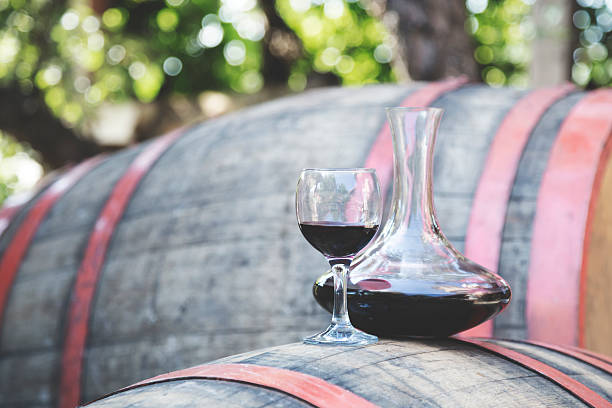
With the development of glassmaking, glass decanters gradually became popular after the 17th century, featuring designs similar to the modern wine decanter, with wide bases and long necks. The transparency of glass not only allowed for appreciation of the wine’s color but also made the release of aromas visible, becoming part of the aesthetics of a banquet.
Interestingly, in upper-class European society, decanters were even carved into animal or human figures for use as banquet decorations.
The core role of Wine Decanter
Many people mistakenly believe that decanters are only for “making wine taste better,” but their function goes far beyond that.
1. Releases aroma and flavor
When wine is sealed in a bottle for a long time, the aroma molecules are trapped, and the tannins of young red wine may be too harsh. After being poured into Wine Decanter, the wine comes into full contact with the air, and the oxygen reacts subtly with the wine, allowing it to slowly “open up.”
For example, a young Cabernet Sauvignon has tight tannins and not very pronounced fruit aromas. If drunk straight, you might find it slightly astringent. However, after being poured into a decanter and left to stand for 40 minutes, the wine becomes smoother, and the layers of fruit and wood aromas are significantly enhanced—an experience that is difficult to describe in words.
This is not only a manifestation of scientific principles but also the core of the pleasure of wine tasting—you can feel the changes and vitality of the wine as you look at, smell, and taste it.
2. Separation of precipitates
Aged wines or unfiltered red wines often develop sediment at the bottom of the bottle. If poured directly into a glass, this can result in a bitter taste and affect the appearance. Wine Decanter allows you to leave the sediment in the bottle and pour only the clear wine.
This practice is seen as a sign of respect for the wine and a manifestation of etiquette in wine culture. It is especially important in upscale restaurants or private tastings—details determine the experience, and the Wine Decanter serves as a vehicle for culture and etiquette.
3. Sense of ritual and experience
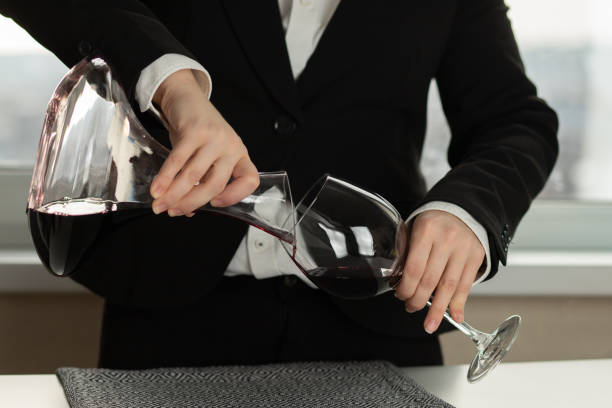
In wine culture, pouring wine is itself a ritual. The sommelier slowly pours the wine from the decanter, the clear glass reflecting the changing colors of the liquid and the gradual diffusion of aromas. Observers are not only tasting the wine but also participating in a “sensory performance.”
This sense of ritual makes wine not only a sensory enjoyment but also a psychological experience—the slower pace allows people to be more focused and relaxed.
Wine Decanter and Modern Wine Culture
With the popularization of wine culture, Wine Decanter has expanded from high-end restaurants to family tables and gatherings with friends and have even become a popular element on social media.
1. Decanters in everyday life
drinking butIn the past, decanters were mainly used in professional settings, but now many households are starting to use them as well. Pouring wine into a decanter releases its aromas and reveals its color, making the experience of drinking wine not just about drinking, but about “enjoying the process.”
This also reflects a modern lifestyle: a slow pace, an emphasis on rituals, and high-quality experiences.
2. Social Media and Cultural Communication
On social media platforms, there is an increasing amount of sharing about Wine Decanter: some people talk about how to properly decant wine, while others showcase various stylish decanters.
This dissemination makes traditional cultural elements more accessible, allowing ordinary people to easily understand and participate. Decanters have become a vehicle for cultural transmission, giving wine culture a new vitality in modern life.
The cultural significance of technology and design
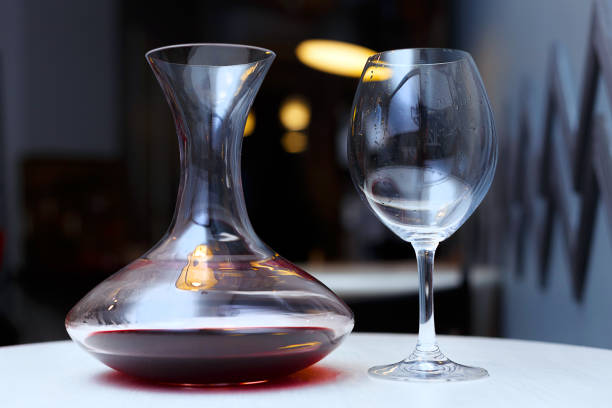
practicality butWine Decanter’s design is not only for practicality, but also embodies cultural aesthetics:
- Wide bottom design: Increases the surface area of the wine in contact with air, releasing aromas.
- Long neck design: makes pouring wine easier and avoids spills.
- Transparent material: showcases the color of the wine while enhancing the visual experience.
These details embody the concept of “equal emphasis on technology and aesthetics” in wine culture.
Practical Tips: Maximizing the Effectiveness of Wine Decanter
- Pour the wine slowly, along the side of the bottle, to reduce foam.
- Observe the sediment and leave it in the bottle.
- Young red wines should be decanted for 30–60 minutes, while older wines can be decanted for a shorter time.
- Food pairings: Red wine with beef and cheese, white wine with seafood and salad.
These steps, though small, can significantly enhance the drinking experience and make Wine Decanter a practical application of wine culture.
FAQ: Wine Decanter and Wine Culture
Q1: Why do wines need to be decanted?
A: Decanting allows the wine to come into contact with air, releasing its aromas and softening its texture, while also removing sediment.
areQ2: Do all wines need decanting?
A: Not necessarily. Younger or tannic wines are more suitable for decanting, while light-bodied white wines usually do not.
Q3: Why is the shape of a decanter different from that of a wine bottle?
A: The wide base and narrow neck design increases the contact between the wine and air, optimizing the release of aromas.
Q4: Will decanting change the taste of wine?
A: Yes, it can enhance the aroma and flavor profile, making the wine smoother and more complex.
Summarize
Wine Decanter is not just a table decoration but also a material symbol and practical tool of wine culture:
- It releases the aroma of the wine and makes the taste smooth; it is a product of the combination of technology and culture.
- It embodies etiquette and aesthetics and is a symbol of social interaction and culture.
- It extends into modern life, becoming part of cultural dissemination and lifestyle.
The next time you use Wine Decanter , remember—you’re not just pouring wine, but an experience flowing with history, etiquette, and culture.
Related Posts

Why do high-end restaurants insist on using Wine Decanter?
- Posted by Alva Edgeworth
My best wine gift: Wine Decanter
- Posted by Alva Edgeworth
Why are young people today becoming obsessed with Wine Decanter?
- Posted by Alva Edgeworth
Why do almost every European household own a Wine Decanter?
- Posted by Alva Edgeworth