
For wine lovers, decanting is a crucial step, especially when enjoying complex red wines. Decanting isn’t just about allowing the wine to air out; it’s also a crucial step in releasing flavor and enhancing the wine-tasting experience. Proper decanting can significantly enhance the aroma and taste of a wine and effectively remove sediment. However, with so many options available, how do you choose the right wine decanter for your wine? This can be confusing for beginners—don’t worry, this article will provide a detailed explanation to help you find the best option.
1. Understand the basic function of sobering up first
When choosing a wine decanter, it’s crucial to understand the purpose of decanting. Simply put, decanting allows the wine to come into contact with air, allowing its aroma and flavor to “breathe.” After all, many red wines, after being bottled for too long, become relatively closed, lacking oxygen exposure, resulting in a lack of rich aroma and flavor. Decanting, however, not only removes sediment but also enhances the wine’s aroma and flavor, enriching its depth and depth.
However, not every bottle of red wine requires a long decanting period. Young red wine and older wine require completely different decanting times. Choosing the right wine decanter can help the wine better release its aroma.
2. Basic design and functions
When choosing a suitable red wine, it is crucial to understand its design principles. The design mainly revolves around two aspects:
- Surface area: Its wider base accelerates the contact between the wine and air. This design helps the wine “breathe” quickly and better release its aroma.
- The shape of the bottle mouth: The bottle mouth is usually narrow. This design helps the wine to pour smoothly and can better preserve the aroma of the wine without being disturbed by external odors.
In addition, some high-end designs have an inclined angle to help the wine flow while avoiding damaging the structure of the wine when pouring—this is especially suitable for red wines that take a long time to decant.
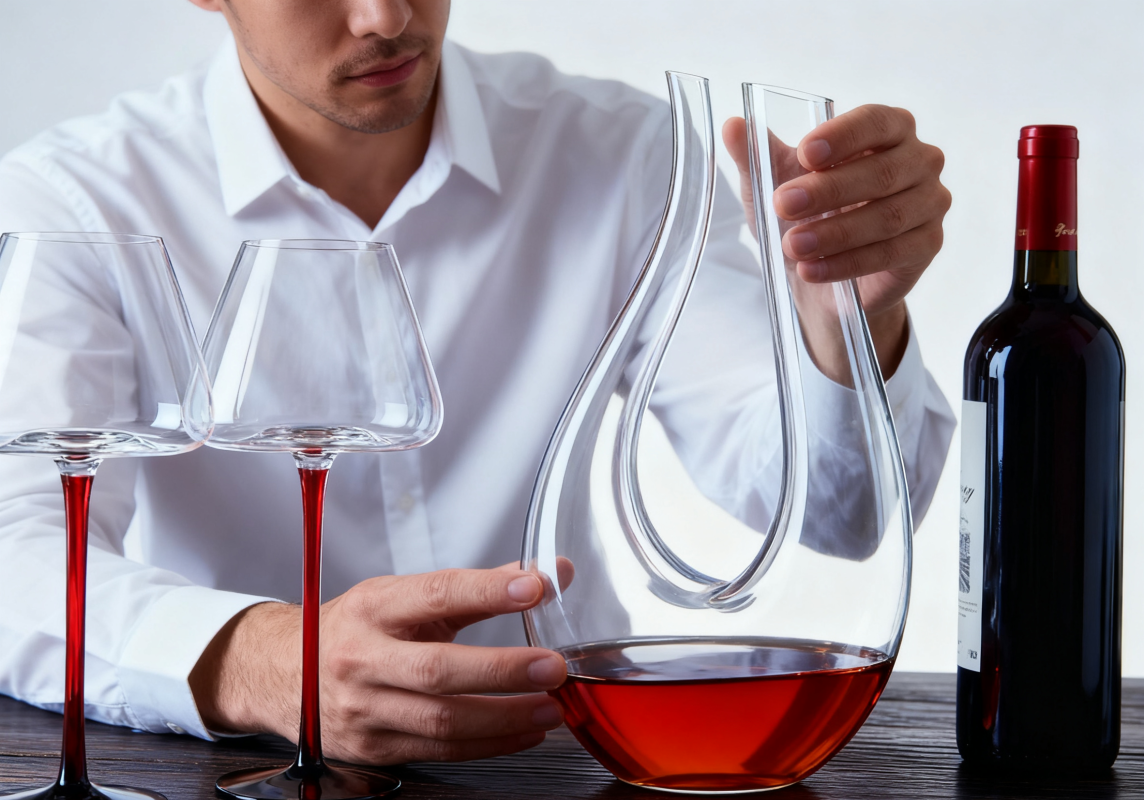
3. Choose the right wine decanter based on the type of wine
Different types of red wine require different wine decanters. We can choose based on the type of wine, vintage, and body structure. Here are some common red wine types and recommended choices:
1) Young red wine
Young red wines like Pinot Noir and Merlot have low tannins and a fresh palate, but they can still release more fruity aromas through proper oxidation. For these wines, choose a wine decanter with a wide base and narrow neck to allow the wine to quickly come into contact with air, allowing the aroma to better develop.
2) Aged red wine
Aged red wines require more care, as they are already fragile, and excessive oxidation can lead to a rapid decline in flavor. Therefore, it’s best to choose a bottle with a narrow bottom and a long, narrow neck. This reduces the wine’s exposure to air and prevents sediment from entering the glass.
3) Full-bodied red wine
For heavier-bodied, tannic red wines like Cabernet Sauvignon and Syrah, a wine decanter should be designed to provide a larger surface area for oxidation. These wines require extended decanting to help them release their complex aromas and rich flavors. Therefore, choosing a decanter with a wide, sloping base will help the wine breathe more fully, revealing its multifaceted flavors.
4. Material selection
The material directly affects the performance of the wine. Common materials on the market include glass, crystal, and ceramic, each with its own advantages and disadvantages. Let’s take a look at the characteristics of each material:
1) Glass wine decanter
Glass is the most common choice because it allows for quick contact between the wine and air without chemically reacting with the wine, preserving its pure flavor. Furthermore, glass is transparent, making it easy to observe the wine’s color and sediment, making it suitable for most red wines.
2) Crystal wine decanter
Crystal’s appearance is regal and elegant, making it a popular choice for decanting high-end wines. Crystal is also stronger than glass and better at retaining the temperature of liquids, making it suitable for storing aged or precious wines. While crystal may be less breathable, its durability and ability to retain temperature make it an ideal choice for high-end wines.
3) Ceramic wine decanter
Ceramics often have a unique artistic quality, making them ideal for storing wine, especially those that are meant to be kept for extended periods. While ceramics may not be breathable, their heaviness and traditional aesthetic make them a work of art during wine tasting.
5. Wine Decanter Capacity
Capacity is another important factor when choosing a wine decanter. Standard designs typically hold between 750 ml and 1 liter, which is just enough for a bottle of wine. If you’re a frequent partygoer, a larger wine decanter might be a good option, as it eliminates the need for repeated pours. If you’re just enjoying a single glass of wine, a smaller one will suffice.

6. Summary: Choose the most suitable wine decanter according to your needs
In short, there’s no universal standard for choosing the right wine decanter. The key is to consider the type of wine, vintage, and personal taste habits. Whether it’s young wine or a vintage treasure, the right one can enhance your overall wine-tasting experience. By understanding the design, materials, and functionality, and considering multiple dimensions, you can choose the wine decanter that best suits your needs.
Hopefully, this article will help you choose a wine decanter that is both practical and aesthetically pleasing, allowing you to enjoy richer flavors and aromas every time you sip wine.