
,Wine is more than just a common drink at gatherings or dinners; it’s also a witness to the rich tapestry of history. As one of the world’s oldest and most beloved beverages, its history is almost comparable to that of human civilization. Throughout this long history, the emergence and development of the wine decanter has invisibly enhanced the wine-tasting experience. More than just a tool, it’s an art form, a cultural legacy. Today, we’ll explore the history of the wine decanter , exploring its evolution from a simple container in ancient times to a refined artifact of modern times.
:1. The origin of wine decanter : the prototype of ancient wine vessels
stone,The history of wine can be traced back to around 5000 BC. At that time, people used clay, stone or wood to make containers to store and transport wine. Although the wines at that time did not need to go through a special “decanting” process like modern wines, they had already begun to be preserved and enjoyed in some way.
introducingIn ancient Greece and Rome, wine vessels were still very simple, and wine was often poured directly from the bottle into the glass. People had no clear concept of oxidation and aroma release. At that time, people occasionally mixed wine with water to create a softer taste. Although there were no dedicated decanters at the time, ceramic bottles and metal jugs did serve the purpose of “de-aerating” the wine, allowing it to come into contact with air and introduce a slight oxidation.
2. The Middle Ages and the Renaissance: Improvements in Container Form
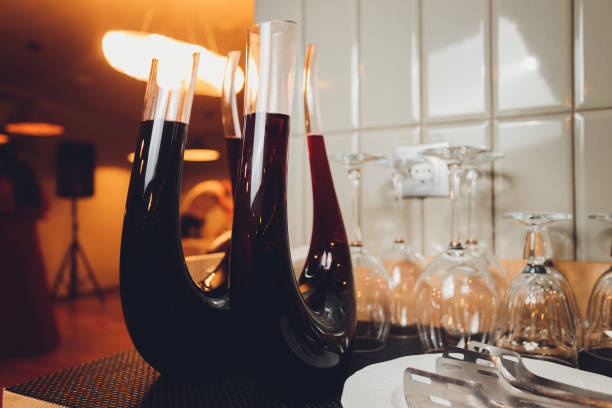
In the Middle Ages, wine began to spread widely in Europe, especially in France, Italy, and Spain. As the quality of wine continued to improve and the culture of drinking wine gradually became popular, people began to realize that wine needs a certain amount of oxidation time to develop its best flavor.
isn’tHowever, the concept of “decanting” in that era wasn’t as familiar to us today. While the aristocracy might use exquisite wine vessels on certain occasions, these vessels served more as aesthetics and status symbols than to enhance the wine’s flavor. During the Renaissance, the design of wine vessels gradually became more sophisticated, becoming not just functional containers but also symbols of status and position. While the scientific principles of oxidation might not have been fully understood at the time, the materials and shapes of the vessels undoubtedly reflected the sophistication of the culture of the time.
3. 17th century: Scientific progress and the prototype of the decanter
Entering the 17th century, wine culture underwent profound changes. Scientific advances led to a recognition of the importance of oxidation in wine flavor. Particularly in France and Italy, with the continuous development of winemaking techniques, the prototype of the decanter gradually emerged. During this period, the decanter became more than just a container; it began to promote the oxidation of the wine and release its aroma.
,In the 17th century , wine decanters were typically made of glass, ceramic, or crystal, and their designs gradually diversified. While the function of wine vessels became increasingly clear, their form still retained a strong aristocratic influence. This was particularly evident in France, where the aristocracy’s appreciation for wine fueled the development of decanters. The distinction between wine bottle and decanter became clear: the bottle served as a storage device, while the decanter was specifically designed to enhance the wine’s flavor.
4. 18th century: The wine decanter is perfected
In the 18th century, wine production and consumption reached unprecedented levels, particularly in wine-producing nations like France, Italy, and Spain. Nobility and the upper classes embraced wine as a key beverage for social gatherings and banquets, and the role of the decanter gained further recognition. By this time, the decanter was no longer merely a decorative item; its functionality began to evolve with increasing sophistication.
-tastingIn the late 18th century, with the widespread adoption of glass bottles, wine bottles became more tightly sealed. This trapped the wine’s flavor within the bottle, slowing its release. Wine experts and winemakers began encouraging the use of decanters, which enhance the wine’s aroma and flavor by allowing it to fully interact with air. Consequently, decanters became more than just decorative; their functionality became increasingly important, becoming an integral part of the wine tasting process.
5. 19th and early 20th centuries: The refinement and industrialization of wine decanters
In the 19th and early 20th centuries, as the Industrial Revolution advanced, wine decanter production became more refined and diverse. Breakthroughs in glassmaking technology allowed for more complex and elegant shapes and designs. During this period, decanters became more than just tools for decanting; they became a perfect fusion of art and function.
As wine consumption grew in popularity, particularly in France, the United Kingdom, and the United States, the demand for decanters gradually increased. Decanters of this period often featured streamlined shapes and intricate decorative details, were often made of glass or crystal, and boasted more refined designs. Decanters became more refined, with a greater emphasis placed on aerating the wine, offering greater possibilities for enhancing its aroma and flavor.
6. Modern: Innovation and diversification of wine decanters
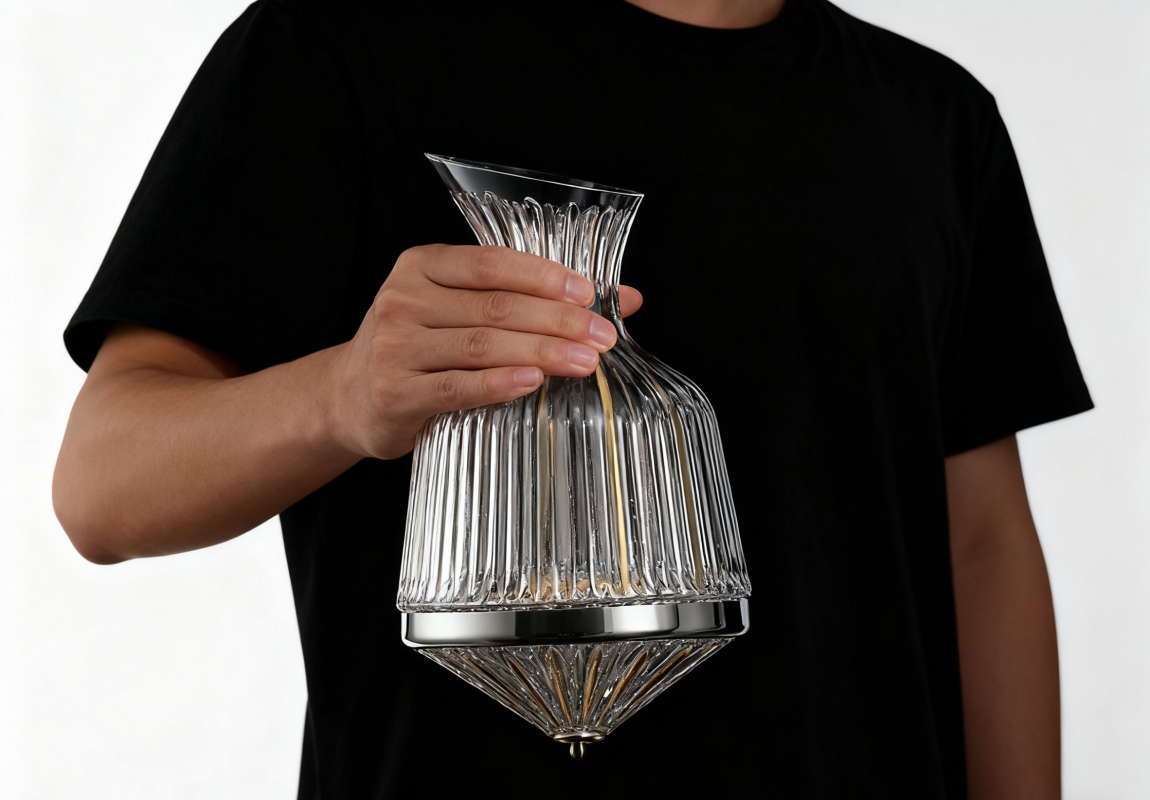
Entering the 21st century, the design and functionality of wine decanters have undergone tremendous changes. Modern wine decanters focus not only on the oxidation effect of the wine but also on their aesthetics and convenience. With the development of technology, many innovative decanters have emerged. For example:
- Electric wine decanter: uses air pump technology to accelerate the contact between wine and air, helping the wine release its aroma in a short time.
- Bubble-type decanter: specially used for champagne and sparkling wine, it can maximize the retention of bubbles in the wine while improving the taste.
- Wine bottle-type decanter: It looks like a wine bottle, focuses on the fluidity and oxidation effect of the wine, and is suitable for high-end wines.
In addition, modern consumers’ demand for environmental protection and sustainability has also led to the use of some new materials. Some decanters use recyclable materials or natural wood materials while still maintaining the functionality and aesthetic value of decanting wine.
7. Future development trends of wine decanters
As wine consumption culture continues to evolve, the future of wine decanters holds boundless possibilities. Future wine decanters will not only continue to enhance wine flavor but also incorporate more intelligent features. For example, smart decanters can automatically adjust oxidation time and oxygen flow based on the type of wine, achieving optimal aeration results.
Conclusion
From simple ancient containers to modern, intelligent designs, the history of the wine decanter is not only a microcosm of wine culture but also reflects humanity’s ongoing pursuit of a better life. From its humble beginnings as a functional tool to its current status as a work of art and a symbol of status, the wine decanter has become an indispensable part of the wine experience. Today, we can experience the fusion of historical heritage and innovation while enjoying fine wine. In the future, with the continuous advancement of technology and design, the wine decanter may become even more intelligent, but the culture and taste it conveys will remain the core appeal of wine.